

Repeat Pattern Types Explained: Block, Brick, Half-Drop and Tossed
A seamless repeat is the smallest piece of a design that, tiled edge to edge, builds the whole surface. Get the tile right and the pattern takes care of itself. But the way you arrange that tile — block, brick, half-drop or tossed — decides the rhythm: whether a small leaf sprig reads as tidy, restful or gently adrift. Each layout has a job, and picking the wrong one can make a lovely motif look like a marching band.
The Tile Comes First
Layout only works if the tile is genuinely seamless. The left edge must match the right, and the top must match the bottom, with motifs crossing the boundary and continuing on the other side. Half a flower on the left needs half a flower on the right at exactly the same height.
Test it before you worry about repeat style: place four copies of the tile in a two-by-two square and study the seams. If you can trace the join, no layout will hide it. Once the seams vanish, repeat type becomes a design choice rather than a repair job.
Block Repeat: Order You Can Feel
A block repeat, also called a straight repeat, places the motif in the same position in every tile. The result is a visible grid: rows and columns of identical shapes, evenly spaced, marching in both directions.
That sounds dull. It isn't, provided the motif earns the discipline. Simple geometrics, dots, rows of tiny stars and crisp botanical silhouettes all look confident in a block repeat. On stationery — a notebook cover, a set of correspondence cards, a planner page — it gives the calm order people expect from a grid.
Watch the ladder effect. When a motif has a strong horizontal or vertical edge, block repeats line those edges up into bold channels across the whole surface. If that feels too rigid, rotate every second motif by 90 degrees or mirror alternate columns. The grid relaxes without losing its structure.
Brick Repeat: Softer and Steadier
In a brick repeat, each row of motifs shifts sideways, usually by half the width of the tile and sometimes by a third or a quarter. Your eye can no longer run straight down a column, so the surface reads as horizontal bands rather than a grid.
This is the layout of brickwork, subway tiles and a great many classic striped wallpapers. It's forgiving for small motifs: a row of tiny birds or berries shifted by half stops any single shape becoming the focal point of the wall. For textiles, brick repeats suit borders, trims and small all-over prints where a block grid would feel mechanical.
Beware of tight rows. If the horizontal spacing is narrow, a brick repeat creates strong stripes that overpower the motif. Give the rows a little air.
Half-Drop Repeat: Movement Without Chaos
A half-drop repeat shifts the motif down by half the vertical repeat on every second column, or every second strip when you tile it across a wall. The spacing stays even — the grid is still there — but it reads as a soft diagonal drift instead of a set of straight lines.
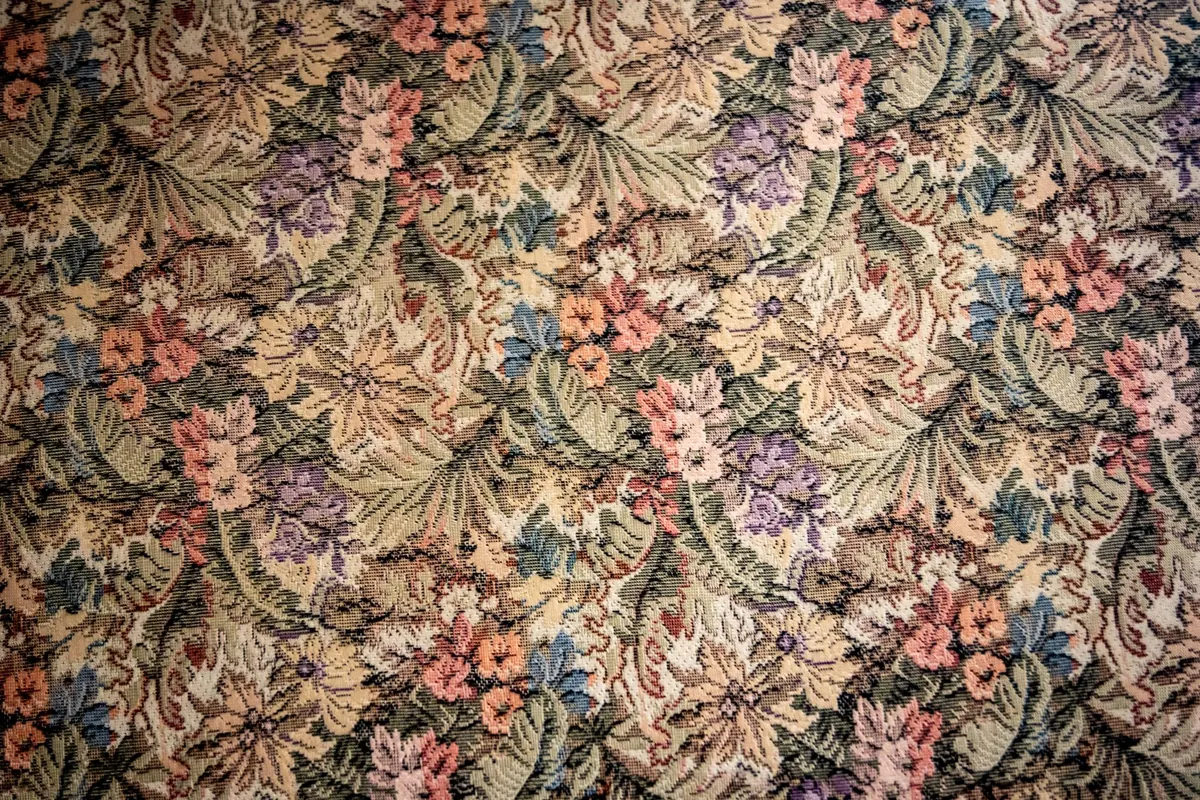
This is the layout most florals want. Foliage, chinoiserie, toile and loosely drawn botanicals all sit more naturally in a half-drop, because the offset echoes the way plants grow: related, never identical, never quite aligned. It also hides joins on large surfaces. When you paper a room, a half-drop repeat breaks the line between strips, so a slightly out-of-true wall is far less obvious than it would be with a block repeat.
The trade-off is that half-drop uses a little more paper or fabric, and the repeat doubles in one direction. Factor that in before you order.
Tossed Repeat: Scatter with Rules
A tossed repeat looks random. It isn't. You still build a tile that repeats perfectly; you simply place motifs at varied angles and positions within it, then adjust until the density is even.
Tossed repeats are the friendliest option for children's fabric, gift wrap, notebook liners and modern wallpapers where a rigid grid would feel too formal. They're also the hardest to get right, because the eye is very good at finding patterns in apparent chaos.
Making a tossed repeat behave
- Set a minimum gap between motifs and keep to it. Clumps are the first sign of a hurried toss.
- Vary rotation, but not wildly. Three or four angles usually read as natural; ten read as noise.
- Check the edges as carefully as the centre. A motif that crowds the tile boundary will repeat into a visible row.
- Squint, or shrink the tile on screen, to catch accidental paths, diagonals and bare patches.
Matching the Layout to the Surface
The right repeat depends on what the pattern sits on and how close people will get to it.
- Textiles: half-drop and brick for drapery, dress fabric and small all-overs; tossed for quilting, childrenswear and pyjamas; block for geometrics, cushions and graphic repeating shapes.
- Wallpaper: half-drop to disguise strip joins and soften large expanses; block for statement walls where the grid is the point; tossed for small, sparse motifs that would look lost in strict rows.
- Stationery: block for notebooks, cards and planners where crisp order helps; brick for slim items such as bookmarks and pencil cases, where a full grid feels cramped; tossed for wrapping paper and journal liners.
- Tiles: brick for wall tiles and borders; block for encaustic and feature panels; half-drop for larger formats where a straight stack looks heavy.
Test the Repeat Before You Commit
A repeat can look fine on screen and wrong on a wall. Run through this before you print, order or publish:
- Print the tile at final size. A motif 3 cm across behaves differently from one 30 cm across.
- Cut four copies and lay them in a two-by-two block. Check the seams first, then step back.
- Photograph the result and shrink it on your phone. Small sizes expose clumps that a large view hides.
- Wrap the sheet around a cylinder — a mug, a jar, a cardboard tube — to see how the layout behaves on a curved or folded surface.
- Look from the distance people will actually be: roughly three metres for wallpaper, an arm's length for stationery, closer still for fabric you'll wear.
No layout is inherently better than another. Block brings order, brick brings a gentle sideways step, half-drop brings movement, tossed brings ease. Choose the rhythm you want the surface to have, then tile it until the seams disappear.
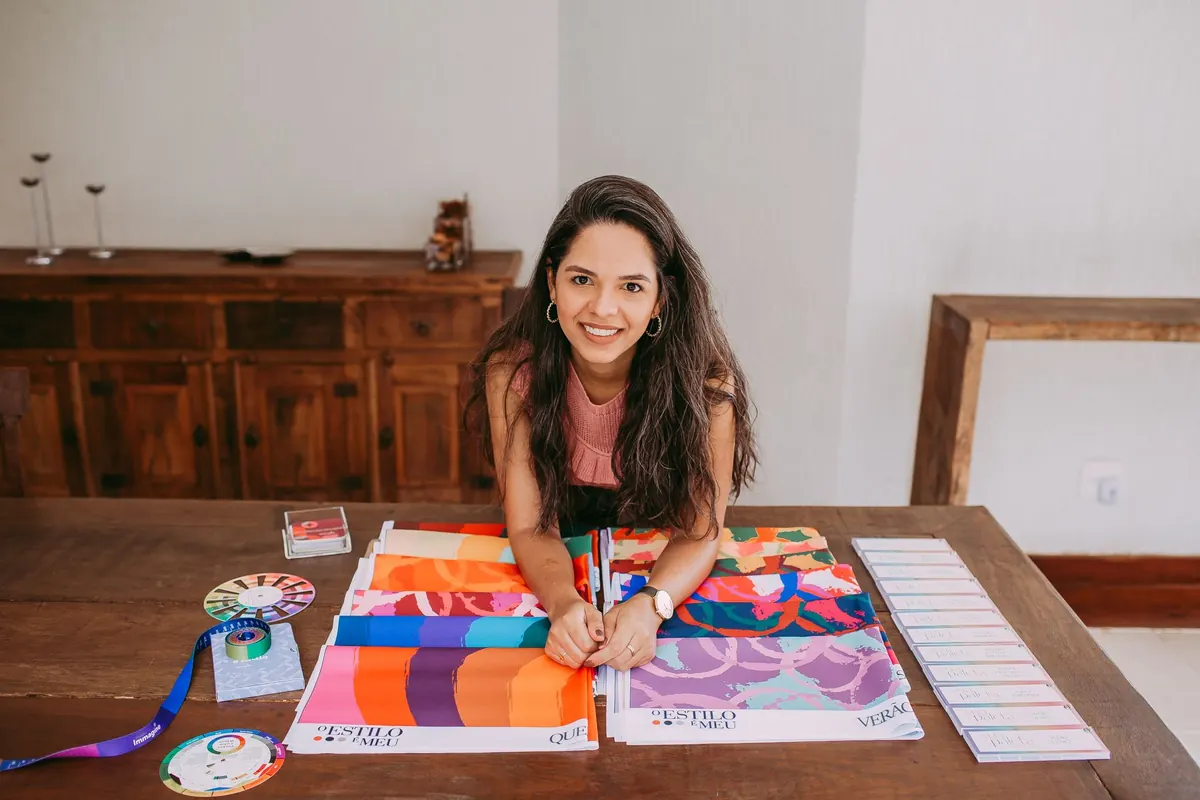
Photo: Helena Lopes / Pexels